360 Camera Long Stick: What Vloggers Need to Know
The Invisible Stick Trick: Turn a Walk into a Movie
One camera. One telescoping pole. Suddenly the street becomes a movie set, a balcony looks like a crane shot, and your travel vlog feels bigger than the backpack you carried it in.
Explore the 4 setups ↓ Find your length →Independent editorial guide · Insta360-inspired visual styling, not affiliated with Insta360
Scene One: The Camera That Seems to Fly
Imagine a sunrise walk along a waterfront. You want the ocean, the buildings, the moving crowd and your own footsteps in the same scene. A normal handheld camera forces you to choose. A 360 camera on an invisible selfie stick gives you room to decide after filming.
Extend the pole, keep the camera properly aligned above it, and record the whole environment. In compatible 360 footage, the stitching process can hide the pole, creating the illusion that a small camera crew is following you. You can reframe the shot later as a wide establishing view, a third-person follow shot or a dramatic overhead reveal.
Before you hit record, it helps to understand what happens between the lenses. Our guide to the real benefits of dual-lens cameras explains the broader capture approach, while our 360° video storytelling techniques guide focuses on building a scene that has a beginning, middle and payoff.
“The secret isn't making the stick longer. It's choosing the angle that tells the story.”
Hold the pole behind you for a floating third-person perspective on a quiet walking route.
Raise the camera for a still, overhead reveal when space and conditions are safe.
Use a stable tripod setup for a stationary introduction, reflection or time-lapse.
The invisible effect is not magic from the pole itself: it relies on a compatible camera's stitching, accurate lens alignment and a stick that remains narrow and straight enough to sit within the stitch area.
Four Ways to Build Your 360 Vlogging Rig
Think of these as four characters in the same travel film. Each does something different, and none is automatically the best for every camera or every trip. Check the current product specification and your camera's mount compatibility before purchasing. For a dedicated equipment shortlist, visit our best Insta360 invisible selfie stick guide; if you shoot with an X5, pair this comparison with the Insta360 X5 accessories guide.
Insta360 Extended Edition Selfie Stick
Picture a scenic square viewed from above, without launching a drone. This is the stick you reach for when the height itself is part of the story. A long, lightweight carbon-fiber design can deliver those ambitious overhead compositions.
- Best scene: calm, open-space overhead filming.
- Trade-off: more leverage, more arm fatigue and more sensitivity to wind.
- Watch for: fully secure extension sections and clearance from people and obstacles.
TELESIN 3m Carbon Fiber Invisible Selfie Stick
On a long itinerary, saving weight matters. TELESIN's extended carbon-fiber option is worth comparing with an official pole if you want tall compositions while keeping luggage lighter.
- Best scene: planned travel reveals and stationary wide shots.
- Trade-off: extra length remains awkward in crowds or wind.
- Watch for: exact product version, mount fit and load rating.
Ulanzi MT-57 Extendable Pole
Not every story needs a ten-foot pole. A versatile extendable support can be easier to frame and manage when you are switching between urban B-roll, simple selfies and everyday filming.
- Best scene: daily filming at modest extension.
- Trade-off: less dramatic overhead reach.
- Watch for: secure threads and camera-specific compatibility; don't assume all poles become invisible.
Insta360 2-in-1 Invisible Selfie Stick + Tripod
You're filming alone. There is no friend to hold the camera while you talk to the lens. A combined handheld stick and tripod lets you switch between moving footage and stationary storytelling.
- Best scene: solo travel intros, static shots and time-lapses.
- Trade-off: bulkier than a plain stick.
- Watch for: stable, level ground; avoid fully extending a tripod in wind.
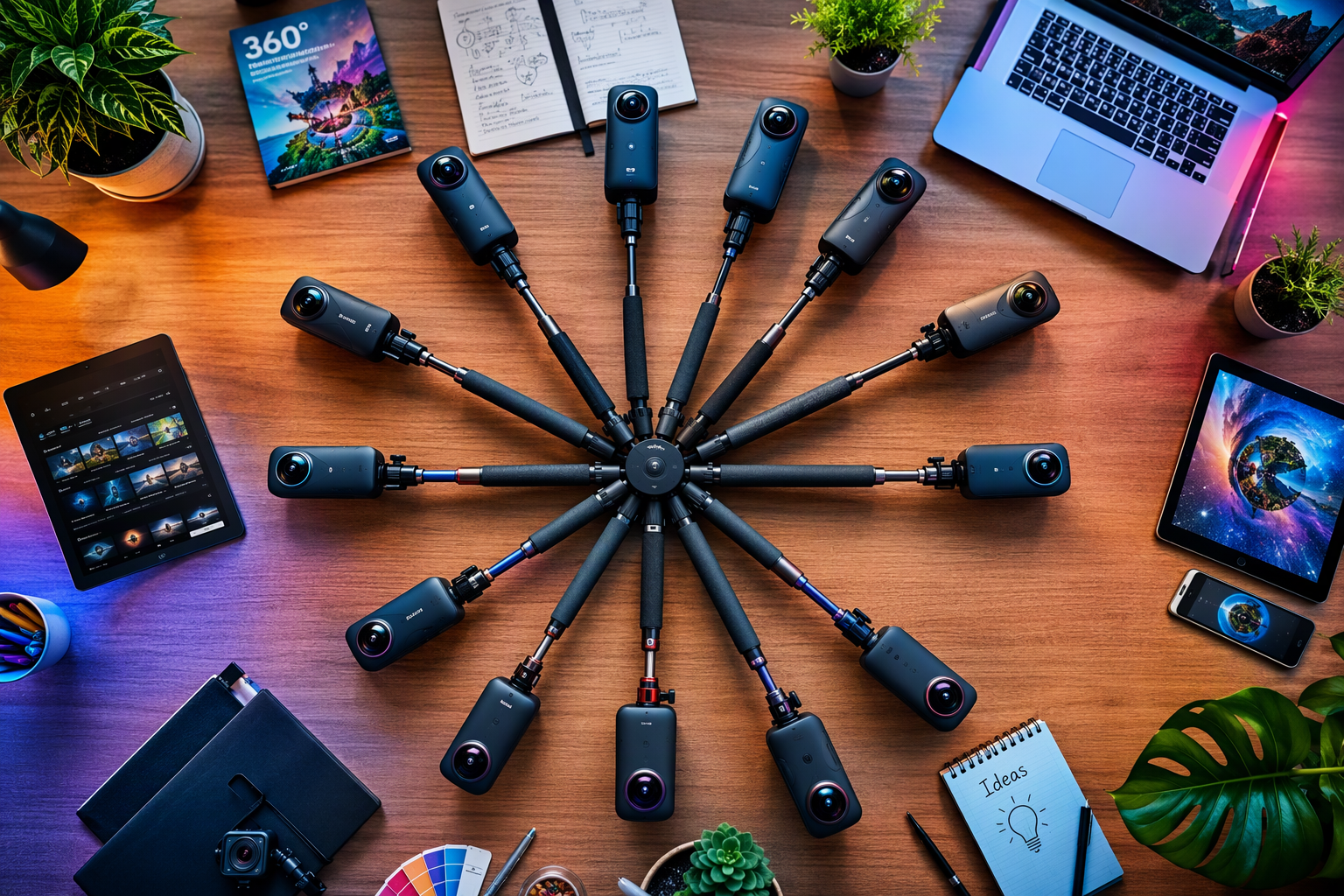
The Length Game: 60 cm, Standard or 3 Metres?
The biggest creative mistake is treating maximum extension as a default setting. Longer poles can widen your composition, but also magnify movement and make your rig harder to control.
For a simple street walk, a shortened pole is easier to hold and keeps the camera close enough for clean reframing. When you need a dramatic overhead view, extra reach earns its place—but it works best in calm, clear surroundings. If a long pole feels awkward for ordinary handheld video, compare your setup with smartphone gimbal options for travel filming instead.
| Your shot | Starting length | Why it works |
|---|---|---|
| Walking travel vlog | About 50–70 cm | Easy to carry, frame and control |
| Third-person follow view | Standard extension, often ~1–1.2 m | More separation between you and camera |
| High-angle reveal | Up to about 3 m, if rated and safe | Creates a crane-like perspective |
| Fast movement / action | Short, reinforced, officially supported setup | Less flex and more control |
| Solo talking-head scene | Stable tripod mode within rated limits | Hands-free framing on level ground |
⚡ Editing trick: record wide, tell the story later
With true 360 capture, you can choose the viewing direction and crop afterward. Try building a sequence from one moment: wide environment → close follow view → overhead reveal. The interest comes from varied framing, not from swinging the pole dramatically. For the software side, follow our beginner’s guide to editing 360° video.
The Pre-Shoot Check: Lightweight Is Good. Secure Is Better.
Carbon fiber is attractive because it can combine low weight with useful stiffness—especially important as the pole gets longer. Aluminum can be an affordable option for shorter, everyday setups. Neither material automatically guarantees invisible stitching or safe support.
Before filming, check the mount connection, extension locks, model compatibility, flex, weight rating and local conditions. A 360 camera on a three-meter stick behaves differently from a camera mounted just a few centimetres above your hand.
- Align the camera: keep the pole on the camera's intended stitch axis.
- Lock every section: confirm the pole won't collapse or twist.
- Check the mount: verify threads, adapters and load rating for your camera.
- Respect the location: never raise the pole near power lines, roads, moving vehicles or people.
- Control the wind: shorten the pole whenever stability is in doubt.
- Test first: record ten seconds, inspect stitching and adjust the angle.
A long-stick shot is only half the travel story. Check sound with our microphone guide for 360° travel vlogging, prepare for longer shooting days with the Insta360 X5 battery-life field guide, and plan nighttime scenes using our X5 low-light performance article.
A clean 360 shot begins with a safe rig, not with the tallest selfie stick you can find.
360 Long-Stick FAQ: Answers Before You Hit Record
Does an extra-long selfie stick make footage shakier?
It can. More length creates extra leverage and can amplify movement, bending and wind. Use a shorter extension for action, and save full-length overhead filming for calm conditions and suitably rated equipment.
How does the invisible selfie stick effect work?
Compatible 360 cameras combine footage from multiple lenses and stitch around the area where the pole sits. The camera and pole need to be properly aligned, and software results vary by model, shooting mode and geometry. Ordinary single-lens filming does not automatically remove the stick.
Is a 114–120 cm stick enough for most travel vlogs?
Often yes. A roughly one-metre stick is a useful everyday compromise between reach, weight and control. You don't need three metres unless overhead framing is central to your shot.
Which option is useful for a solo creator?
A 2-in-1 stick and tripod is convenient for switching from walking footage to stationary introductions and time-lapses. Use the tripod only on stable ground and within its rated configuration.
Is carbon fiber always better than aluminum?
Not always. Carbon fiber is often lighter and stiffer for comparable designs, but its quality and price vary. The right material depends on required length, load capacity, transport weight and budget.
Can a three-metre pole replace a drone?
It can imitate some elevated crane-style angles without a drone, but it cannot fly or produce the same moving aerial shots. Treat it as a creative overhead tool, not an aerial aircraft substitute.
Can I use a generic pole with an Insta360 camera?
Sometimes, if the attachment, rated payload and shooting mode are compatible. But an invisible-stitch result is not guaranteed with every pole. Check your exact camera and accessory documentation.
Where should I buy a long 360 selfie stick?
Compare current listings from the manufacturer's official store or established camera retailers. Match model/version, maximum extension, material, warranty and support details before placing an order.
Editorial note: This article is a creative gear guide based on the supplied draft, not a hands-on product test. Lengths and features vary by model generation; confirm current manufacturer specifications and use safety guidance before buying or filming. Insta360 is a trademark of its respective owner. No affiliation is implied.


Comments
Post a Comment